

By Parker LaMascus
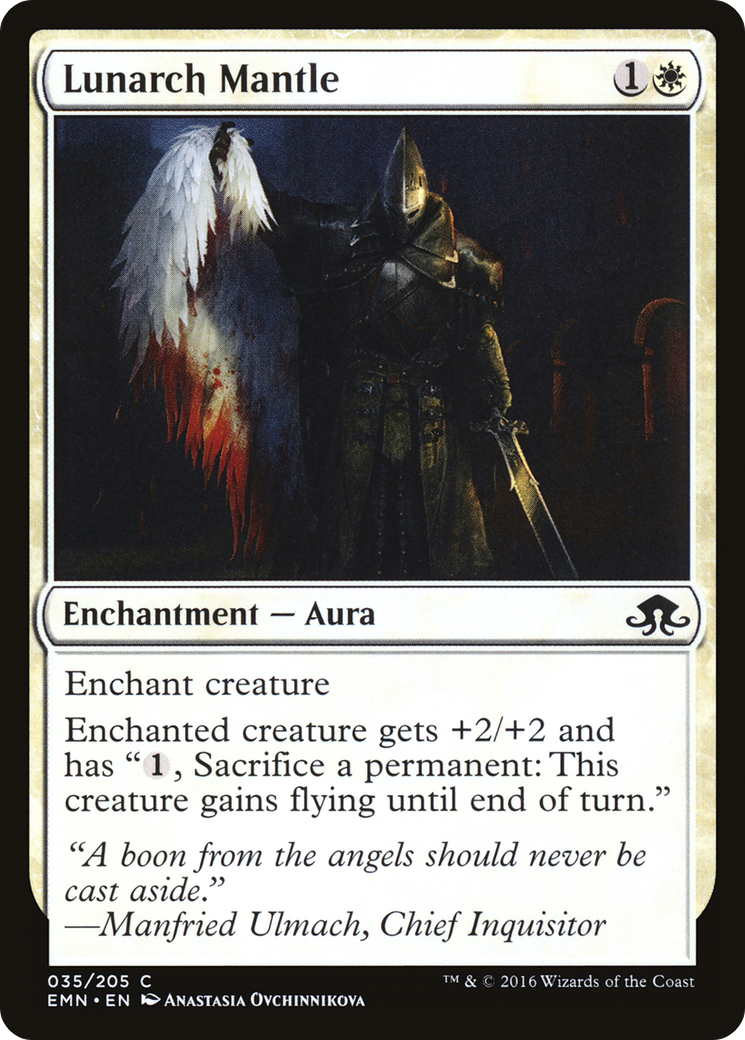
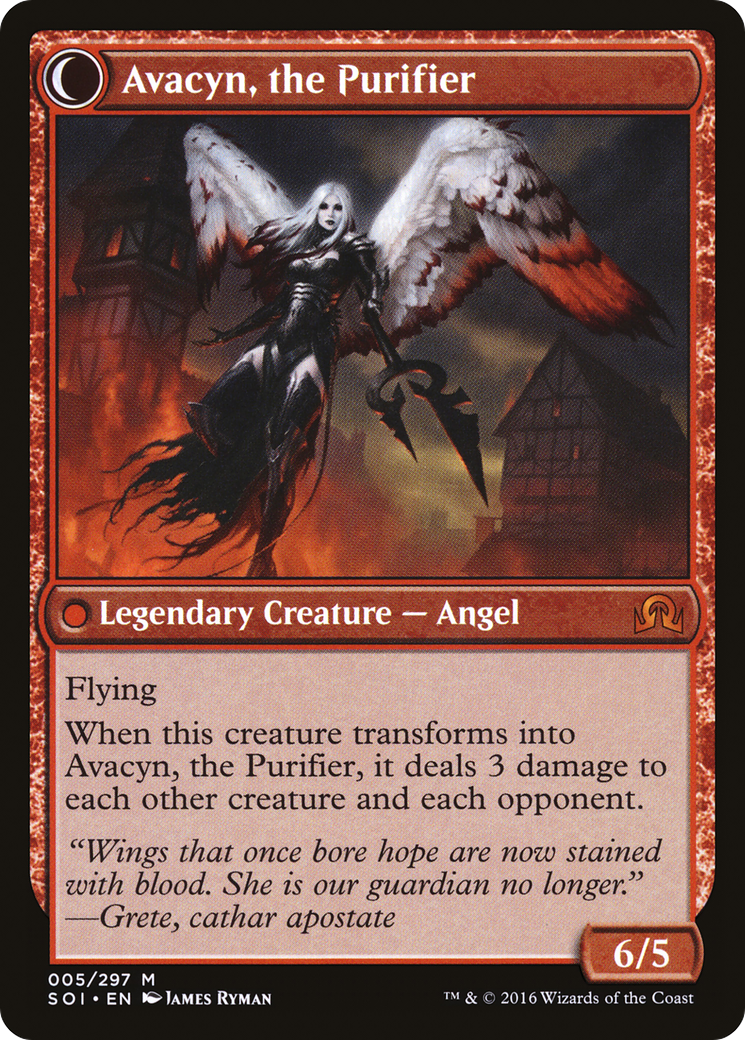
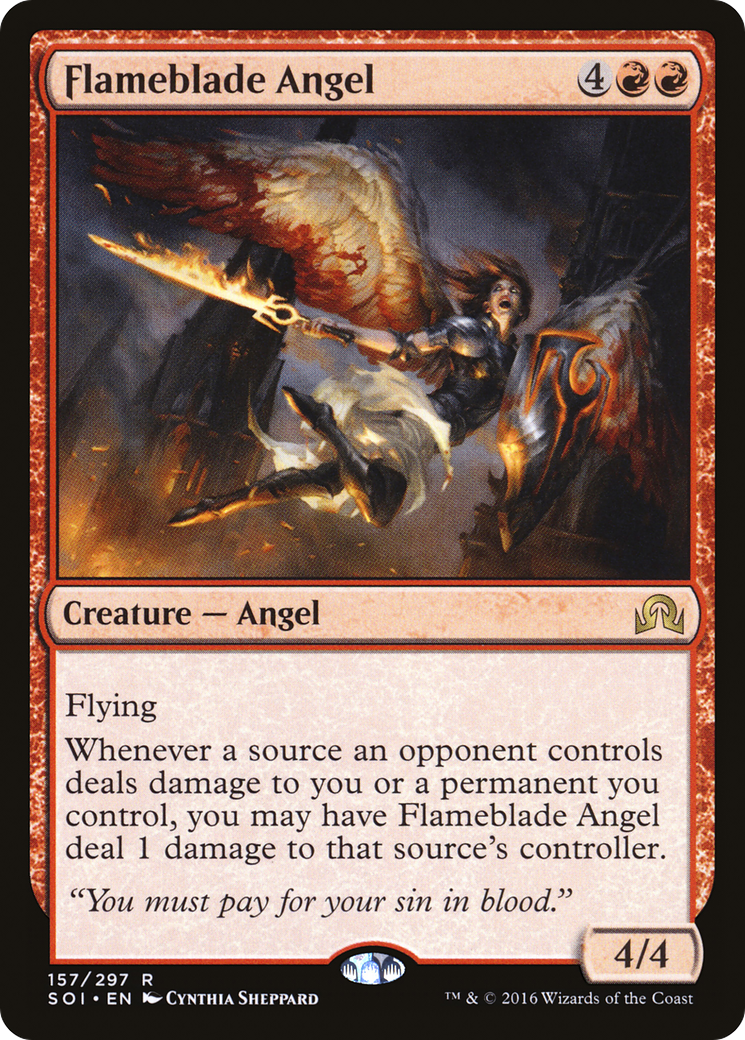
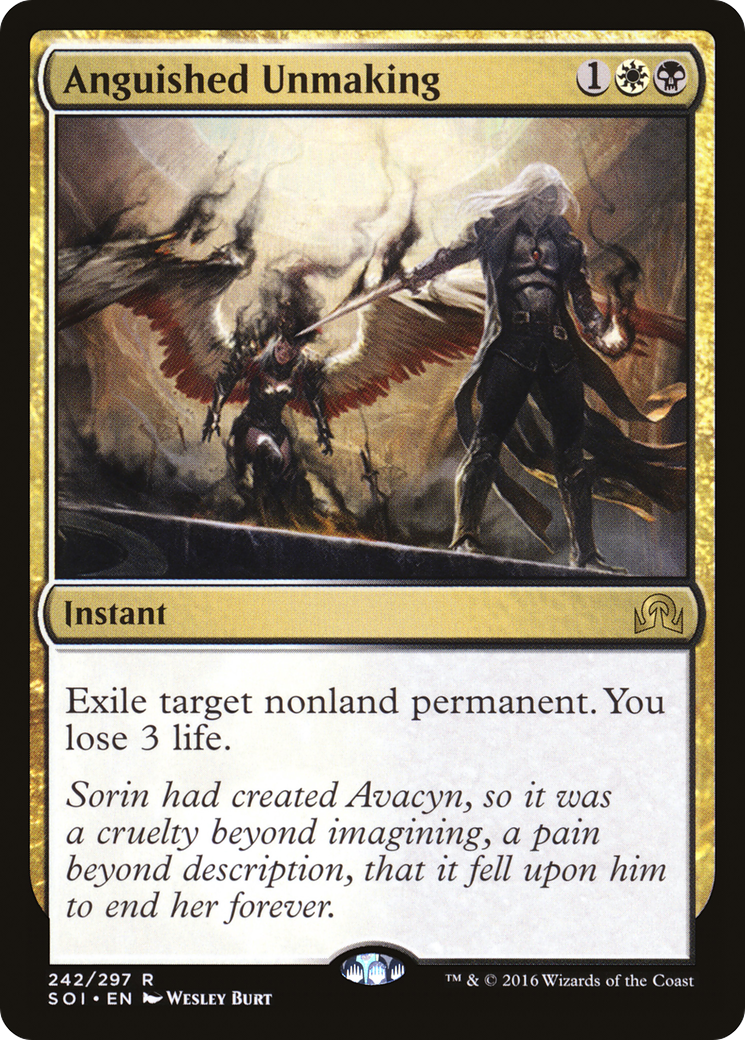
Phila, PA | Shadows Over Innistrad depicts a world unhinged. Archangel Avacyn has gone mad, waging a campaign of extermination against imagined foes. In response, the leaders of her church, the Lunarch Council, hunt corrupted angels and innocent mortals with equal zeal. Thalia, onetime savior of Thraben, turns heretic when she discovers that the Council secretly worships the demon Ormendahl. Meanwhile, mortal and monster alike experience strange mutations of the body and terrors of the mind, which race through the populace like plagues. The gameplay of SOI mirrors the conspiratorial mood, Madness and Delirium deranging every game.
In just a few months, Eldritch Moon would ask us to believe that Innistrad’s maddening is due to an alien god. But for now, the townspeople suffer Travails they do not deserve, and Innistrad’s messiah will soon be executed by her father. In the absence of public truth and solidarity, conspiracy blooms, fueling authoritarianism. In other words, Shadows Over Innistrad looks a lot like present-day Earth.
Minneapolis experienced three murders in January. Two of these victims were American citizens killed by Immigration and Customs Enforcement, ICE, in the midst of an immigration crackdown that is disrupting schools, abducting 5-year-old children as bait for their parents, arresting constitutionally protected reporters who cover the protests. And, though Minneapolis is the most visible site of ICE repression, the agency is conducting similar operations in Chicago, LA, Philly (where I currently reside), and even my unremarkable hometown of Oklahoma City. Our president and his staff routinely lie to the American public about the motivations and details of these operations, trying to paint the peaceful grassroots protests as the work of a “radical left” conspiracy.
Conspiracy theories are not new, but they are newly powerful in the decade since Shadow Over Innistrad’s release in 2016. Naomi Klein writes in her 2021 book Doppelganger that conspiracists often get the facts wrong, but the underlying feelings are correct (or at least informative). For example: no, Tylenol does not cause autism, but the pharma industry does have a real track record of reckless profit-seeking that lends the crackpot theory emotional weight. If you’re willing to exploit those “correct feelings” of betrayal and isolation, while dispensing with facts, then you can earn a lot of money – and a lot of political followers. The political Right, Klein argues, has seized on conspiracies to gain power, especially by driving health-food hippies from the liberal left into the arms of white-nationalist sympathizers in a so-called diagonalist alliance.
These odd bedfellows beg the question: why don’t the hippies’ and soccer moms’ social or liberal values outweigh their mistrust of pain meds? Well, if you believe that yoga or essential oils or organic carrots have super-charged your kids’ immune systems, then herd immunity reminders will fall on deaf ears. Disabled or vulnerable populations may not benefit from being fit, affluent, fully insured, and/or carrot-fueled, but the diagonalists say: that’s just the wages of your bad decisions, and if you get the flu, maybe Nature is just taking its course. The Right’s power brokers, meanwhile, draw similar conclusions from their thinly disguised affinity for eugenics. Klein calls both diagonal positions a “comfort with culling,” a comfort shared among the denizens of Innistrad.
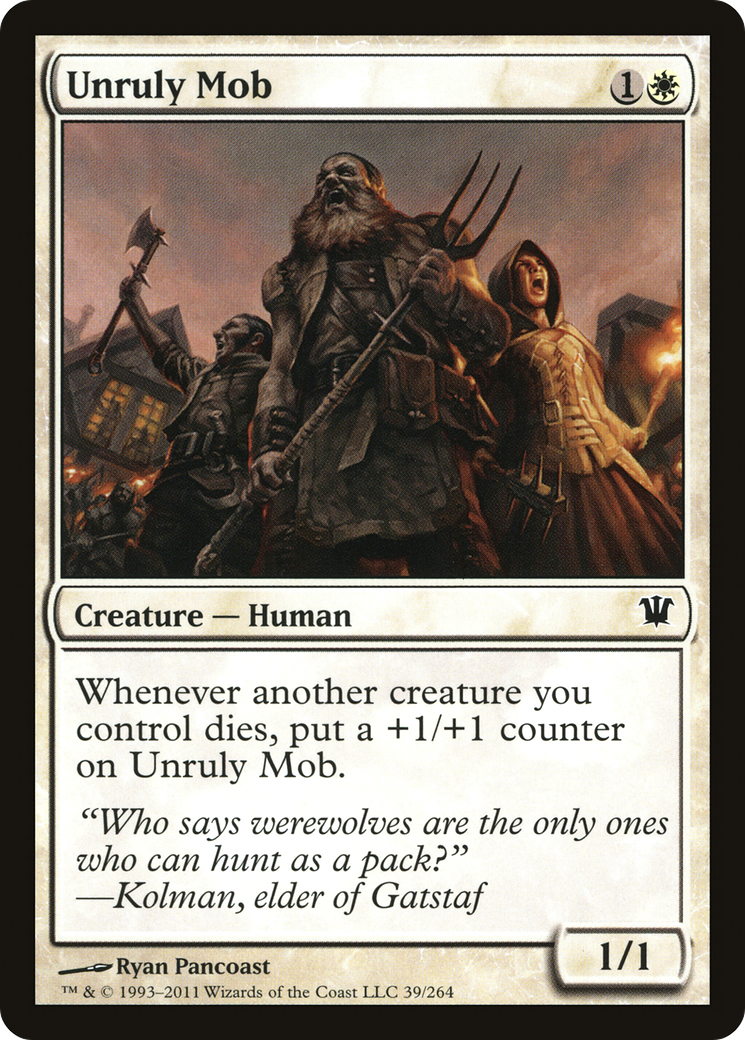
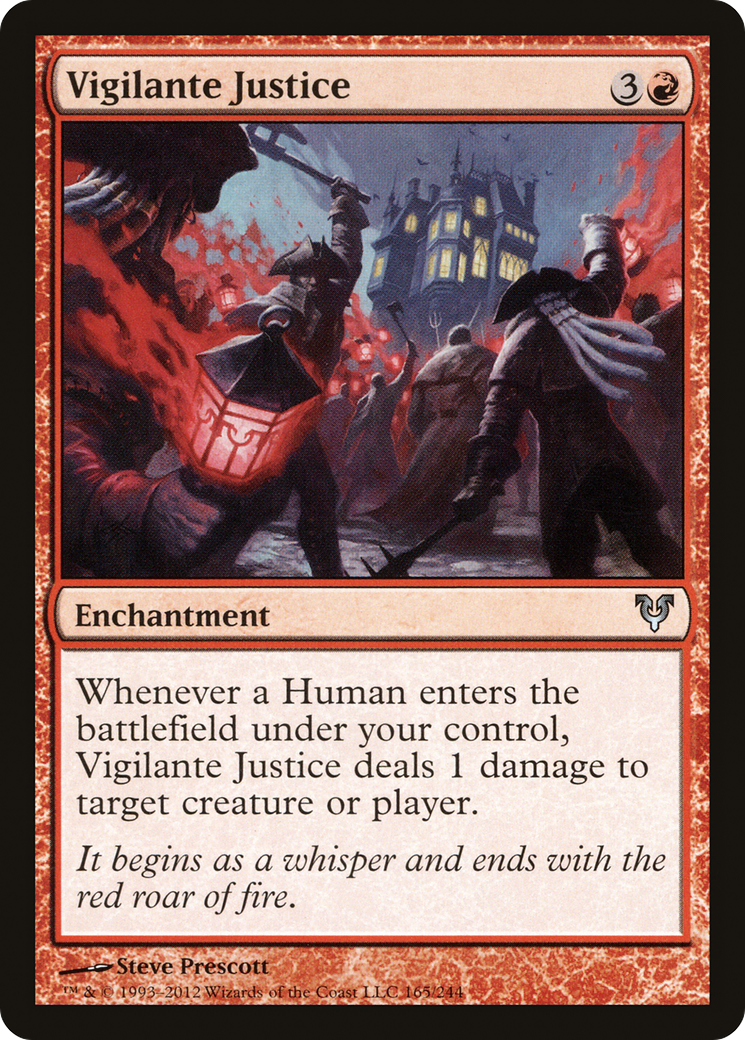
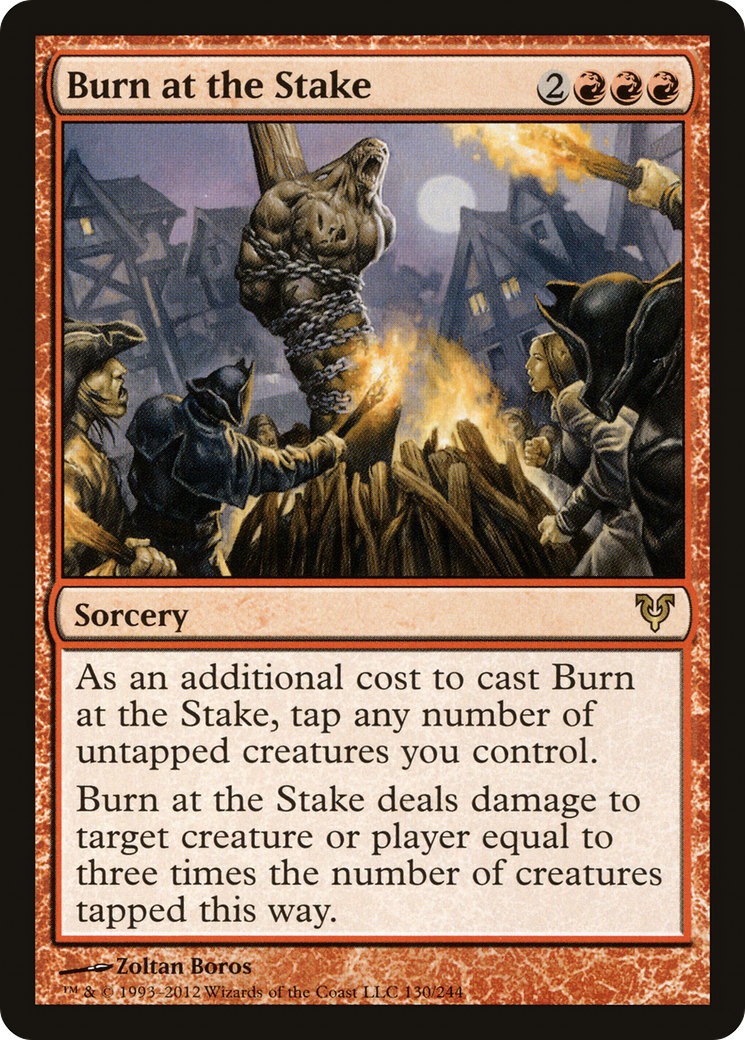
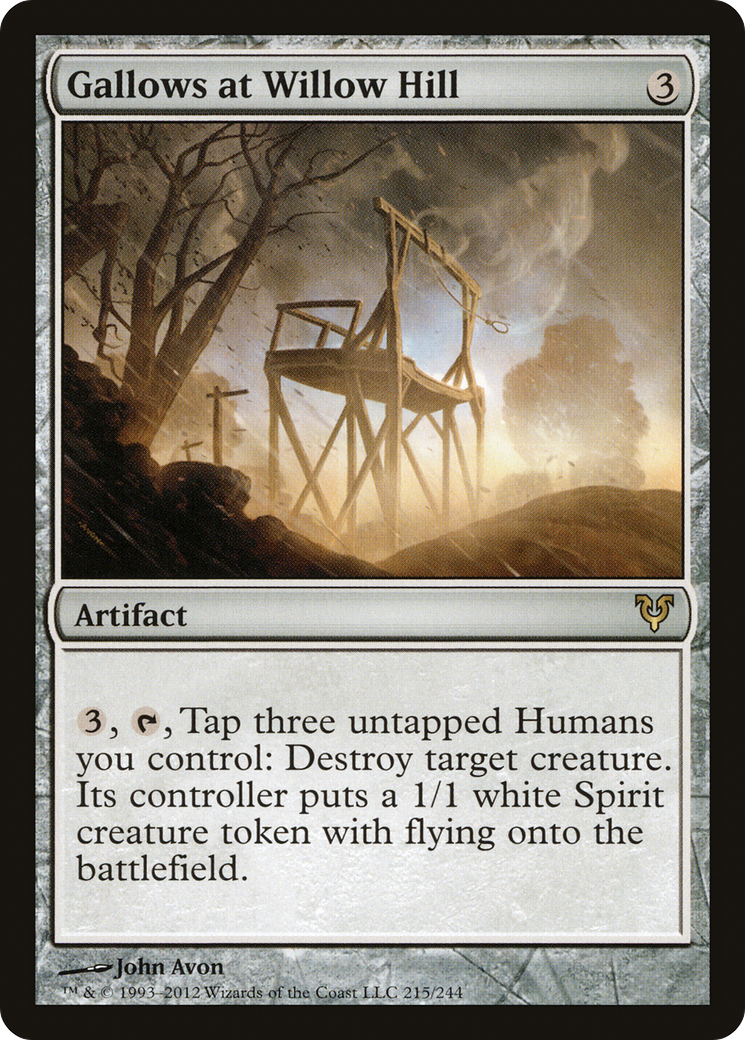
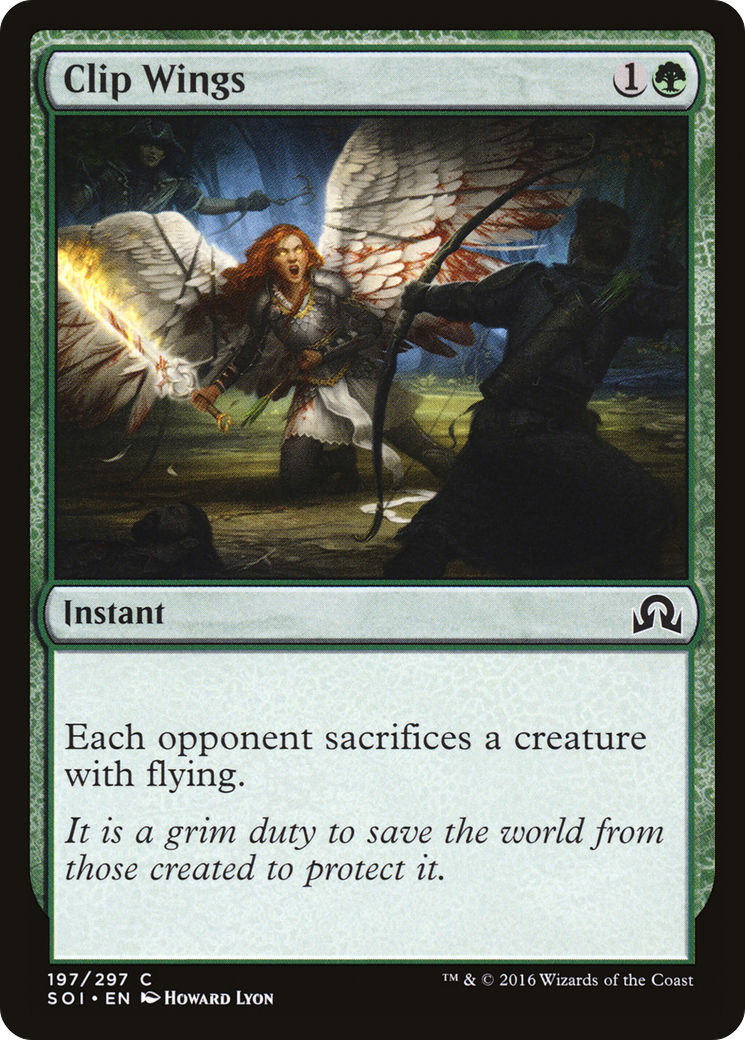
In 2011, Innistrad block depicted acts of populist violence positively as “revolts” and “uprisings,” outright rebellion against the plane’s vampiric elites. Against the many races of monster who bear human faces, the Innistradi conducted inquisitions and, if necessary, vigilante justice, as cards like Unruly Mob, Vigilante Justice, and Kruin Striker demonstrate. If a villain got caught, being Defang-ed and coerced into target practice was one of the best available outcomes. Better than being Burned at the Stake, or hung upon the Gallows at Willow Hill.
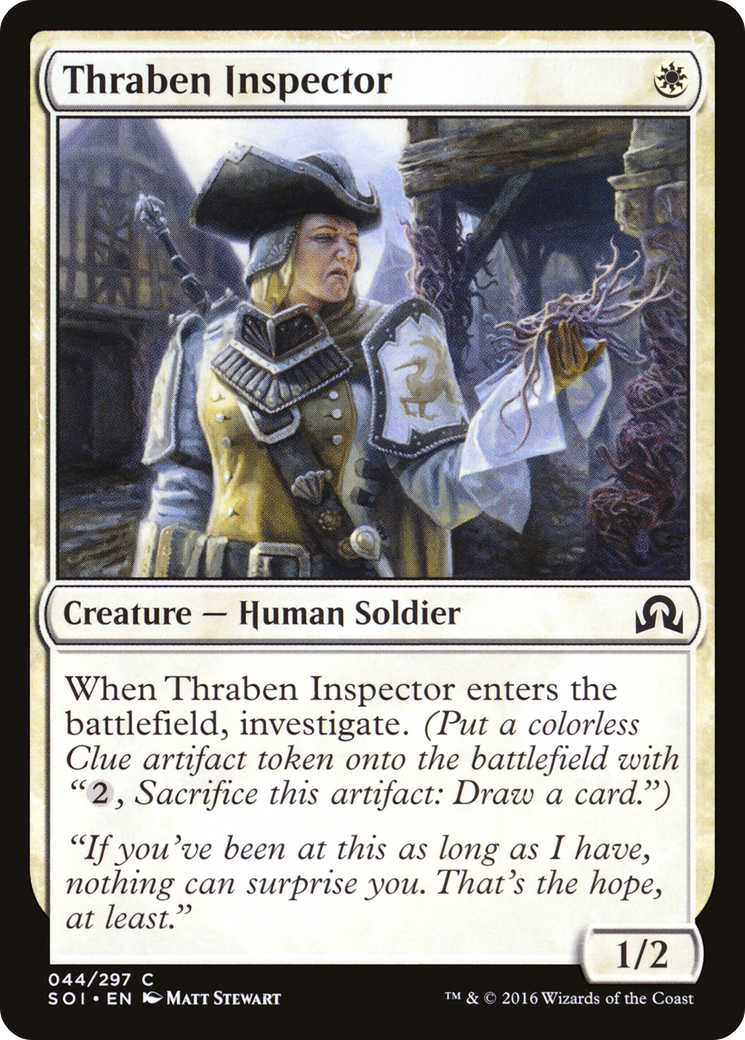
Five years after Avacyn’s emergence, Shadows Over Innistrad depicts a more evolved vigilantism. The Lunarch Council has sent missionaries across the plane, but now they are akin to an occupying army, bringing guillotines (Inquisitor’s Ox), weapons and torture equipment (Lunarch Inquisitors), and stockades (Bound by Moonsilver). For now, the citizens tolerate this occupation, or even collaborate, as shown on cards like Stern Constable, Nahiri’s Machinations, and Unruly Mob. We might conclude that a little violence is justified in the face of such existential threats as zombie hordes and vampire overlords. But the Lunarch Council are not catching monsters in their brutal dragnet – they are the monsters!
Look, I don’t know whether Innistrad is a democracy, but all humans (and citizens, and non-citizen residents) have unalienable rights, rights that include safety from broad-daylight abduction by a theocratic, most-definitely-unwarranted goon squad. Ends do not justify means, and the abridgment of civil and humans rights is unjustifiable. The President of Innistrad, if he exists, might claim that a little privacy invasion is the price society has to pay to catch “illegal, criminal aliens” in our midst. However, journalist Hamilton Nolan reminds us that
“hiring more armed men does not, in fact, do anything to solve the underlying problems like poverty and inequality and oppression that produce ‘crime,’ and therefore... every dollar that you spend on armed men is one that is not going to mitigate the actual systemic issues that create the conditions that the armed men purportedly exist to fight.”
For the Innistradi, their underlying “systemic issues” are 1) their political elites are literal undead vampires, and 2) their church leaders have been infiltrated by the demon-worshipping Skirsdag cult (see SOI’s Spiteful Motives, Westvale Cult Leader, and Wayward Disciple). The inquisition, it turns out, is really in service of the demonlord Ormendahl (as seen on Westvale Abbey), which might explain its atrocious success record. Nolan explains that this outcome was yet another predictable flaw of armed policing: “when you create large pools of armed, empowered men, sooner or later someone whose ideas you dislike will be in charge of them.”
We’re certainly seeing Nolan’s analysis play out in America this year. When faced with these “armed, empowered men,” we might feel a little like the hapless humans of Innistrad, preyed upon by vampires and werewolves. However, unlike Innistrad, our form of resistance can’t be individualist vigilantism. That’s a superhero fantasy. The solution is organizing, and learning from those on the frontlines of this conflict.
For example, my own city recently hosted an ICE OUT protest in the brutally cold January dusk. I attended, not because I thought it would topple the entire regime, but because I wanted to be reminded that I was not alone. Getting offline and cheering with strangers is a wonderfully calming antidote for the often-maddening influence of social media, and Klein reminds us that “calm is a form of resistance.” That rally emphasized how everyday workers can make their workplaces safer from ICE by organizing and exercising collective power – a similarly populist inspiration as Innistrad’s Rally the Peasants, but much more effective than vigilantism.
I am also listening to my neighbors’ calls for help: a local resource recommended donations to local immigration law offices, local immigrant bond funds, or to established national groups like RAICES, ACLU, National Immigration Project, Immigrant Defense Project, Legal Aid Justice Center, and many more. Whatever your ability and tolerance for risk may be, I urge you to do the same, finding ways to support your neighbors.
When we see an inquisition dramatized to absurd proportions on the cards of SOI, it might be a subtextual critique of repressive regimes like the one Americans are currently living through, and a larger-than-life representation of resistance. Unfortunately, SOI gets the cause of Innistrad’s crisis exactly wrong.
See, Earth’s political economies aren’t rigged because of any cults of Ormendahl worshippers. They’re rigged because of a system called capitalism, where bribes, media bias, and financial wrongdoing are easier to get away with when you’re rich. The sensational conspiracies that fill our social media feeds, Klein argues, are propagated by billionaire-owned media empires precisely because they distract from real issues of inequality, exploitation, and power that are predictable outcomes of the capitalist system. Real issues, like American citizens being harassed, detained, and even murdered for standing up for their neighbors. “In a just world, we would have been talking about [real] and proven scandals around the clock; most of us didn’t, in part because the clock was being run out with the fallout from made-up plots.”
The made-up plots can tend to sound like this, if you just switch a couple of nouns: “the Lunarch Council are demon-worshippers,” or “Avacyn went crazy because somebody summoned an eldritch god from beyond our reality.” Here, I don’t mean to downplay one particular demon named Epstein, or those around him who operated for decades with impunity. The American public is learning terrible truths about what happens when rich, powerful men believe themselves to be above the law. However, though the particulars of these men’s crimes are lurid and new, their pattern of criminality is not. We learned it from the Panama Papers, from the lies that began the Iraq War, and from the criminal negligence that defrauded the American public before the Great Recession.
In the real world, there are no monsters in the moon, only spectacular lies told by would-be kings to misdirect from their banal fraud, dishonesty, and corruption. When Shadows Over Innistrad dramatizes conspiracy tropes, it can reveal those logics in our mundane world… or it can legitimize the made-up plots, further distracting from the systemic, structural analysis of power that is required to understand and organize against a rigged system.
The Rutgers scholar Jack Bratich explained to Klein that, without systemic analyses of capital or class, “[liberals] end up defaulting to the stories the West tells itself about the power of the individual to change the world. But hero narratives easily flip into villain narratives.” Eldritch Moon is an example of this flip, showing that our heroes – Avacyn, Bruna, Gisela, the Lunarch Council – were nothing more than hidden villains, the puppets of an even bigger bat-winged and/or tentacled villain. All the most far-out conspiracies were true all along!
When Thalia, the savior of Thraben, learns of the corruption within Avacyn’s church, she and Odric and Arlinn Kord defect from the church, fighting against the Lunarch repression. They also call upon the Gatewatch, Magic’s low-carb Avengers, to kick some interplanar ass. The conspiracy-drenched Shadows turns into the hyperindividualist shōnen of Eldritch Moon, and the mirror to Earth shatters. In the real world, there are no monsters in the moon, but you do have neighbors that need your help.
Parker LaMascus is the Philly-based editor of Lucky Paper, where he writes a column about Cube design, history, and community.
If you enjoyed this piece, consider subscribing & supporting CASCADE CASCADE - this piece is one of our last that will be free to the public before we go Behind the Veil. Thanks.