

Switch
I owned museum-worthy art before my first Magic card.
In high school, I competed in Academic Decathlon. For the 1999-2000 academic year, the Art event focused on works at the Saint Louis Art Museum, or SLAM. My mother drove me there from Indiana. One day, amidst paper notes and digital camera photos, we visited the gift shop.
A small case by the jewelry displays held tiny glass sculptures. To my eye, they seemed plain. I didn't know much about Kiki Smith, either, except that she was an Artist who made Museum Art. But the price tag told me that I could own Art by a Museum Artist for $150. Instant obsession.
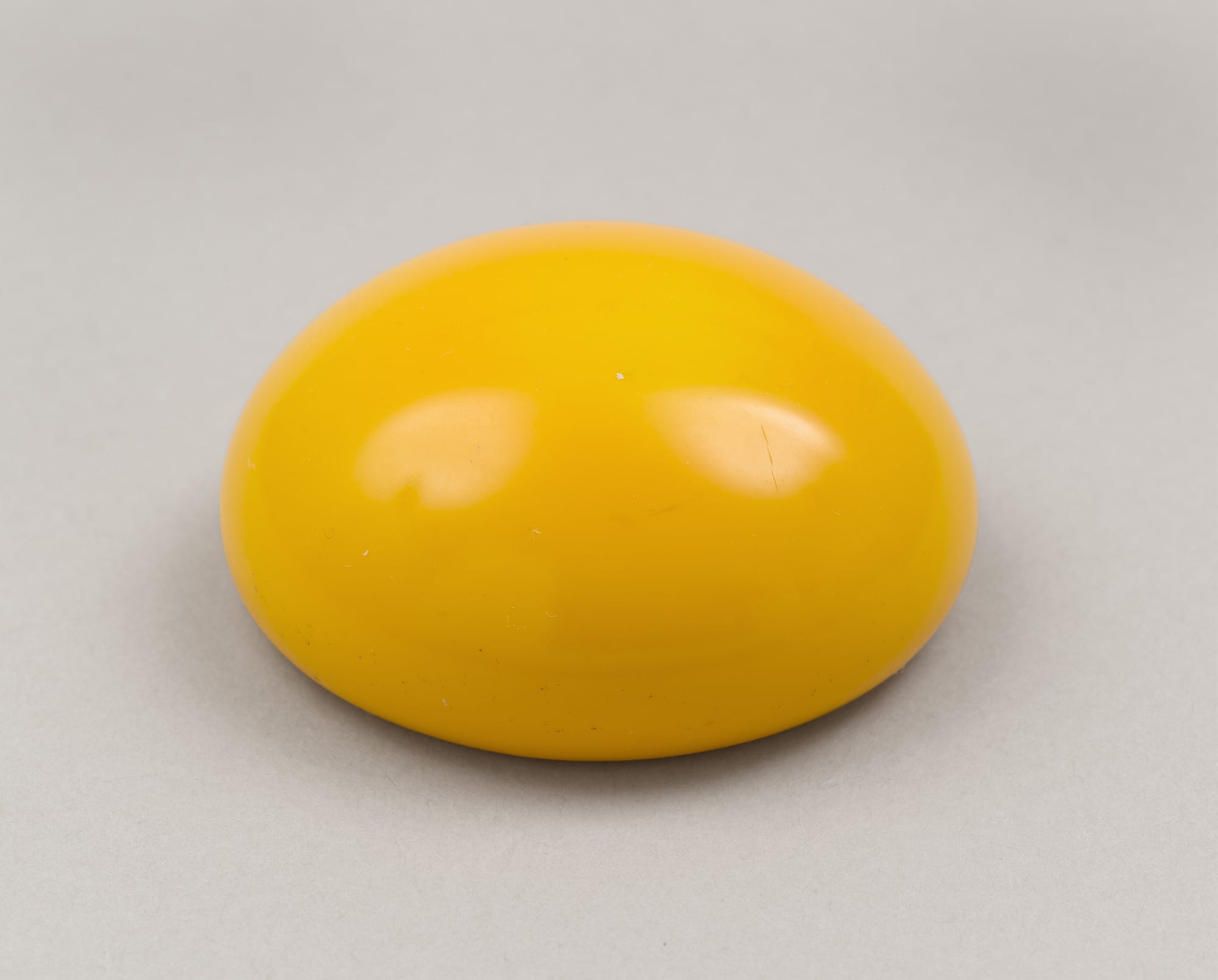
I asked the lady if I could see Kiki Smith's Yolk. She let me handle it. She must've asked why I, a fourteen-year-old boy who looked and sounded younger, was interested. I must've said something about Art by a Museum Artist.
It wasn't enough to want Art by a Museum Artist, she told me. I had to like the art. Did I? I hesitated. She took back the Yolk and asked us to wait while she went to the storeroom.
The lady came back with a print. The paper was about half the size of a sheet from one of my notebooks, and the image on it was smaller still, like a 4" x 6" from school photo day. The girl in the print wore rags. Her eyes seemed to stare into my soul.
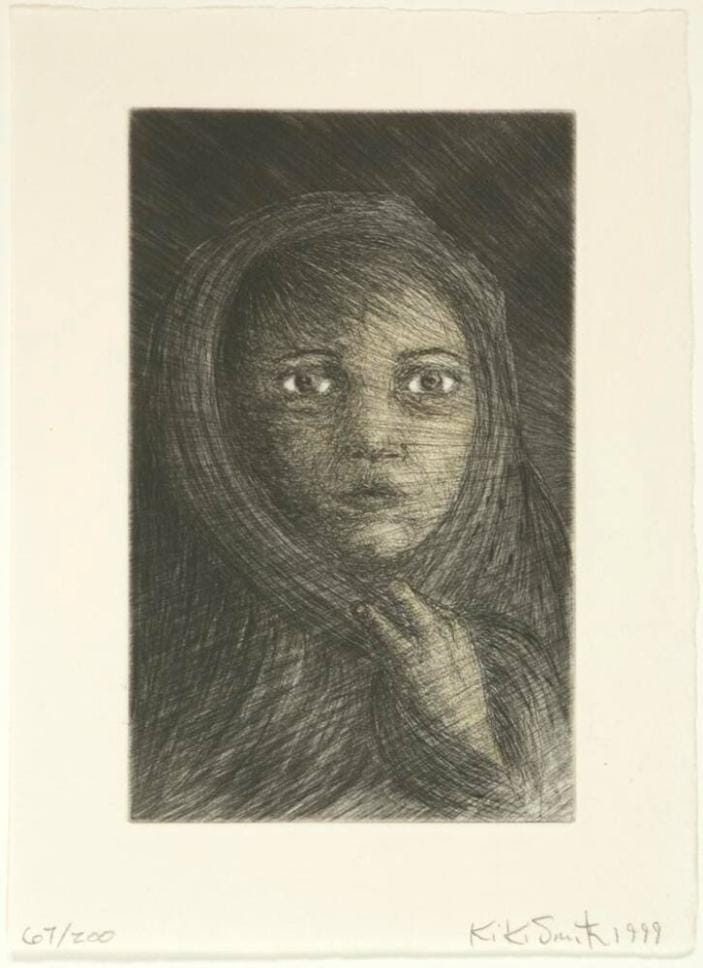
The lady told me how Kiki Smith had an exhibit at SLAM. To help the museum, Smith had made a limited-edition intaglio print, Match Girl, that SLAM could sell to raise funds. Most of the 200 prints were gone, but a few remained. She thought I'd like it better.
I did. But $250 was years of saved-up souvenir funds from trips to the National Spelling Bee, the Bahamas, and Disney World. Was I really about to spend it all on one piece of paper? I looked to my mom. Mom shrugged and told me what she always did: It's your money.
My money could buy That Art from That Museum Artist. So it did. Thirteen $20 American Express traveler's checks later, Match Girl was mine.
As first art purchases go, Match Girl was better than most. The Museum of Fine Arts, Houston holds one, as does the Baltimore Museum of Art and even the Metropolitan Museum of Art. It could've been the beginning of decades of engagement with the fine art market.
Yet that vine withered. Commercial art galleries had far less time for a curious teenager than the lady at the SLAM gift shop. I was a serious coin nerd already, and the numismatic community welcomed and celebrated young people like me. Why bother with hostile places?
So I didn't. It would be several years and a much different field before I bought art again.
Painting
In 2003, I was a freshman and then a sophomore at Rose-Hulman Institute of Technology. I'd picked up Magic: The Gathering my senior year in high school, and my grab-bag of cards was as powerful for making friends as it was weak in the metagame.
The first booster packs I bought were Odyssey, and one of my early rares was Sungrass Prairie. At first, the art amused me. Ron Spencer painted brash, twisted stuff. Why was Sungrass Prairie so different?
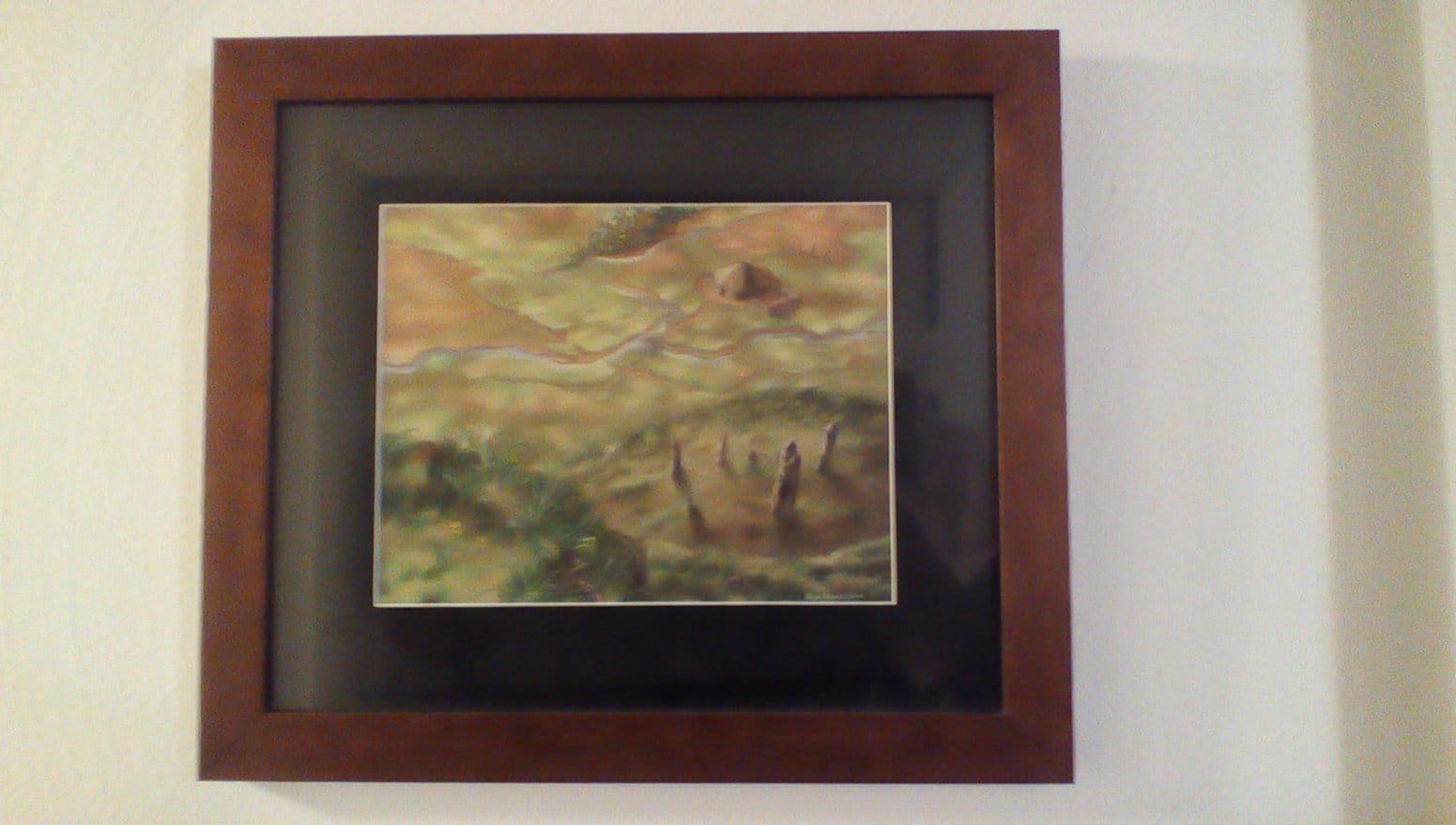
One benefit of life at Rose-Hulman was my first unfettered access to the Internet. Online, I discovered Spencer's calm and even cute side: Rath's Edge, Bear Cub, Infernal Spawn of Evil. I also found his website, which listed paintings and prices for the few customers of the time.
That's how I learned I could own Magic Art by a Magic Artist for $300. And though I didn't have a banking account, I had pocket money and a gas station on the edge of campus. I mailed a money order to Nebraska. Spencer mailed Sungrass Prairie to Indiana. That's how it was, then.
Sungrass Prairie moved with me to Texas and then Virginia. It's in another state now, another's hands. I enjoyed Sungrass Prairie for over a decade, sold when the market was high, and used the money to take my mom to Europe. Two sets of memories leave no room for regrets.
Prelim
In 2011, I described Matt Cavotta's Spiritual Asylum as "$150 I'll never get back". In 2026, that wouldn't be an issue. Jim Pavelec's Pulling Teeth once sat in a bin with a $100 price sticker. In the 2020s, a final Magic painting failing to sell for $1000 is genuinely shocking.
It's hard to understate how different the market for Magic: The Gathering original illustrations was in the game's first two decades. Between 2007 and 2011, I bought four paintings used to illustrate five basic lands for under $1500. That won't buy one basic on the MtG Art Market.
The debut of the MtG Art Market on November 10, 2016, is useful shorthand for the end of my run buying Magic finals. Rising interest in current and nostalgic illustrations from Magic players made good as techies or quants sent prices through the roof. Great for artists, not for me.
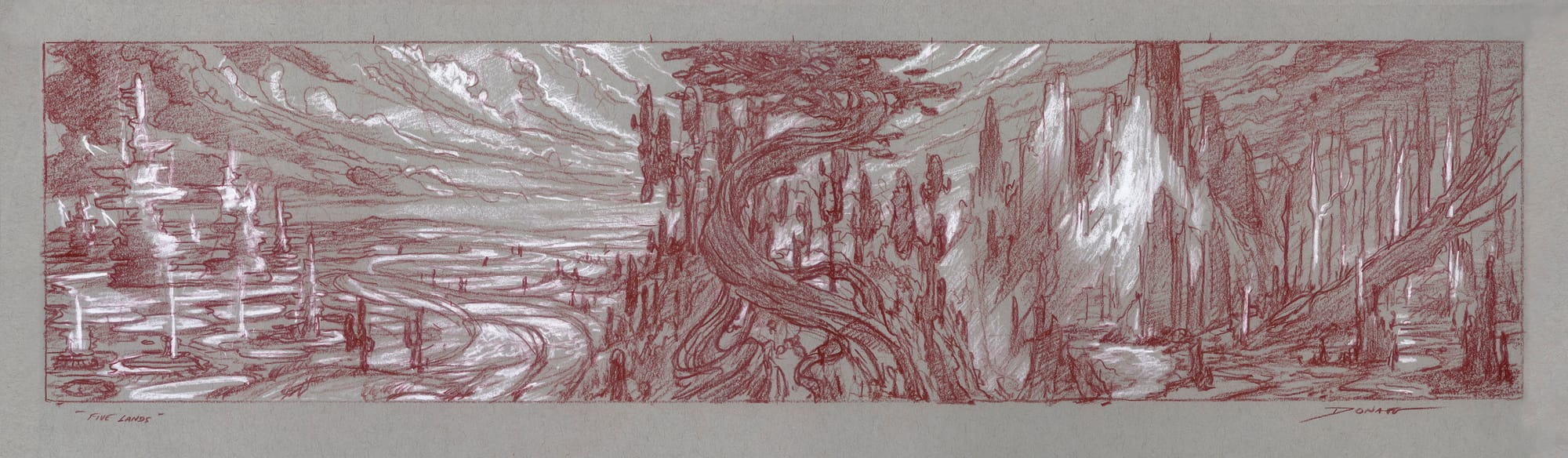
Unable to compete for the best Magic finals, I refocused on preliminary drawings and color studies. In a master's hands, prelims are artworks in their own right. Donato Giancola's Grand Prix Panorama Study #1 is as essential to my illustration collection as any final painting.
As with paintings, a few prelims have left my collection. In 2021, I gave up a trio of notable prelims for Bloodstone Cameo, a personal grail: the final illustration for the first spell I ever cast in a game of Magic. When I held it, my Magic art quest felt complete.
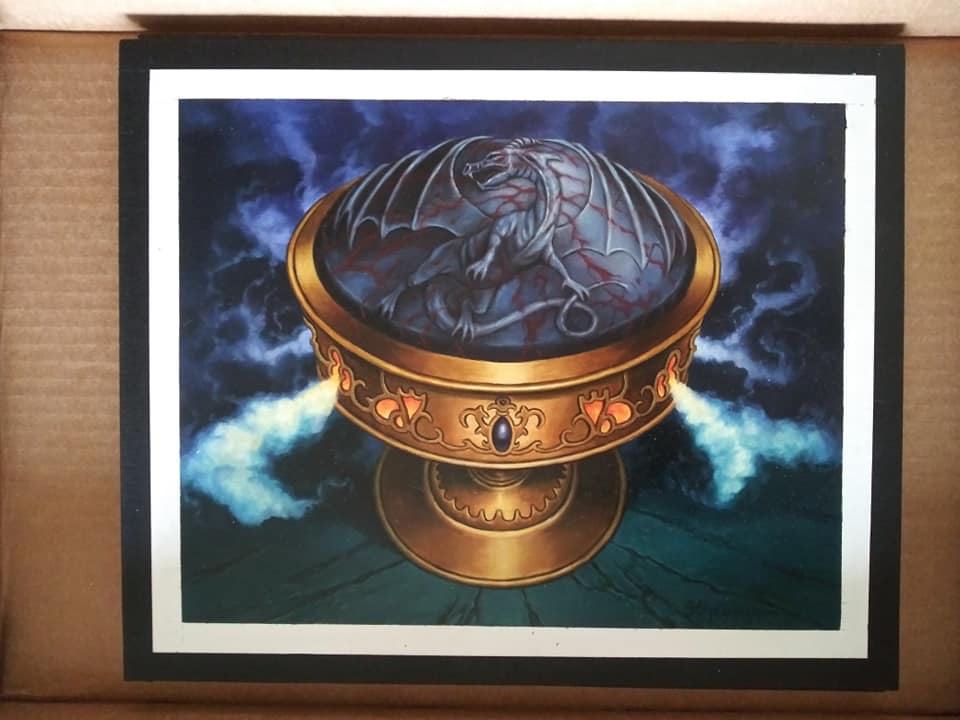
Magic art wasn't quite done with me. I've bought a couple of prelims since, and been the unsuccessful "PM1" a time or ten. And museum art wasn't done with me either. To start that collecting quest, however, I had to go back to high school.
Small
In 2020, a pandemic-induced nostalgia kick led me to learn that, not only was Academic Decathlon still a thing, so too was a maker of third-party test prep materials whose livelier style I remembered well. I reached out, and so began a summer side hustle now in its sixth year.
As a Decathlete, Art had been my strongest subject, though I'd focused more on scoring points than true appreciation. Working on Art materials, I found myself re-engaging with fine art, gaining not only by age and wisdom but also by years of Magic art connoisseurship.
The 2022-3 season's Art selections included the Harriet Powers Pictorial Quilt. I'd grown up with quilts, but their treatment as fine art was new to me, as was a community mentioned in the official materials: Gee's Bend, Alabama.
The look of Gee's Bend Quilting caught my interest. The story of how the quilters made beauty despite racial and economic repression hooked my heart. And browsing the Black Belt Treasures Cultural Arts Center in August 2023 changed my collecting course.
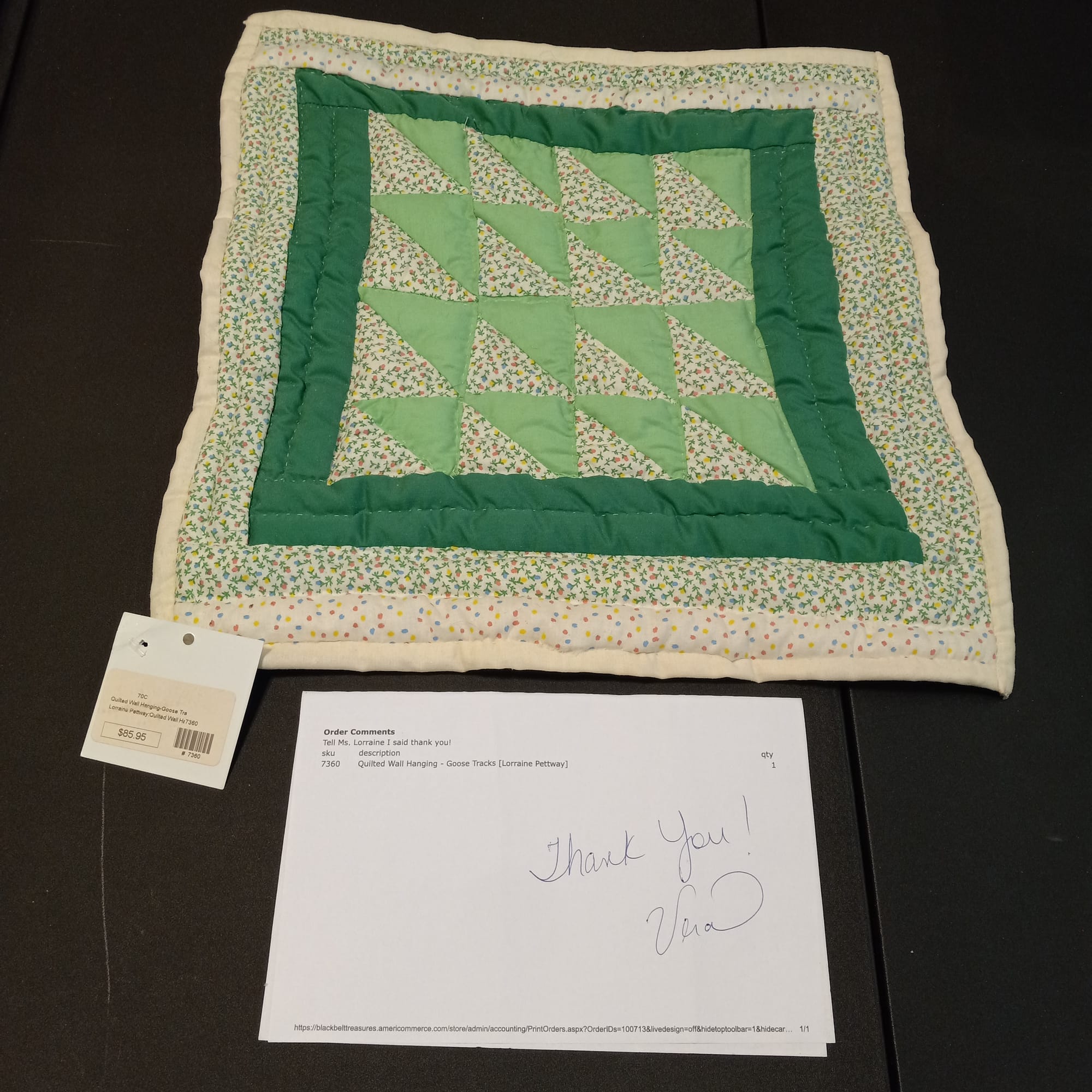
That's where I found Goose Tracks, a 15" x 15" fiber art "small" by Lorraine Pettway. Her work had appeared in The Quilts of Gee's Bend, a group show at the Whitney Museum of American Art. She'd been name-checked in a star-making review in The New York Times.
Goose Tracks was Art by a Museum Artist, one of a kind, and $85.95.
That discovery shattered the wall I'd put up between myself and owning fine art. No gallery games or gatekeeping, just a small work I loved for less than a hundred-dollar bill. And as I admired Goose Tracks, I asked the question that would define my next three years of collecting:
Can I do it again?
Quilt
One way I "did it again" was purchasing $40 potholders by Andrea Pettway Williams, Lorraine Pettway's daughter. Williams is among those Gee's Bend Quilters who created great art in their teens, such as her Blocks and Strips Work-Clothes Quilt at the Philadelphia Museum of Art.
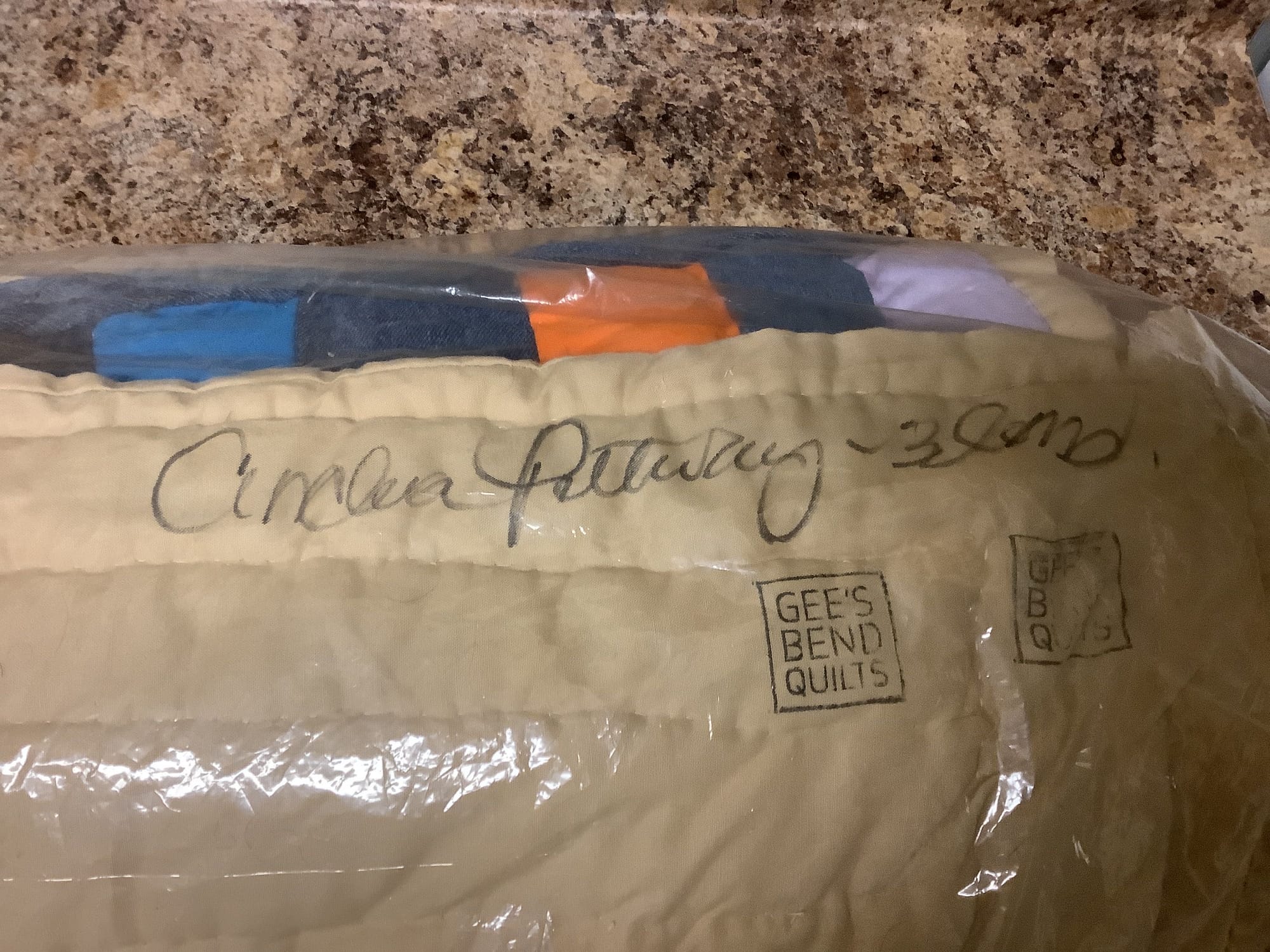
While I have searched widely for $100 work by Museum Artists and bought broadly from active Gee's Bend Quilters, Williams's work is special to me. That's why I commissioned her to make a lap quilt, a smaller type of quilt meant to cover the legs, in December 2024.
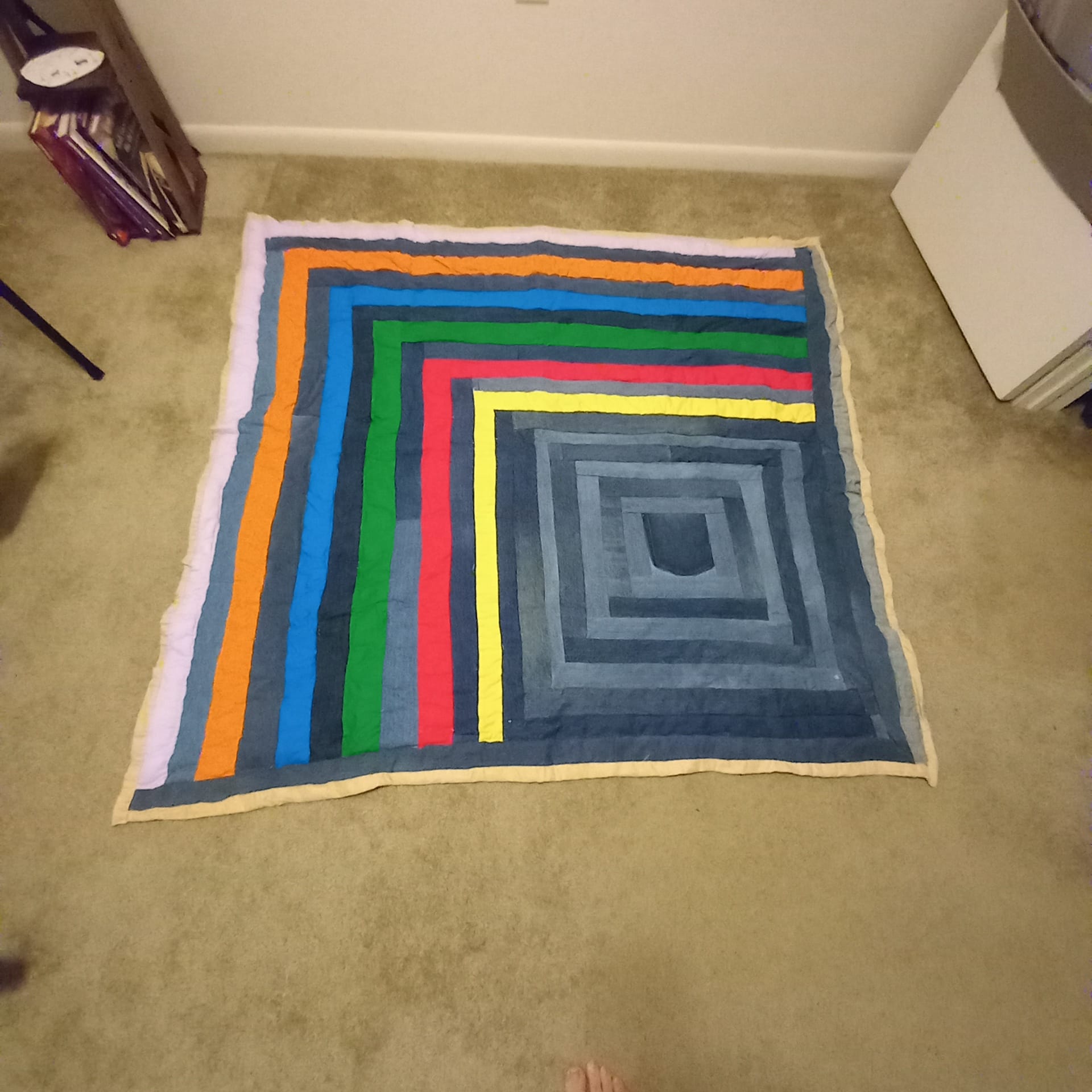
The Housetop-Sweep Quilt arrived in time for Christmas. As I laid it out on the carpet, I got the same feeling as my first times seeing Donato Giancola's Cartographer, Ryan Pancoast's Discover the Impossible, and Jason Rainville's Storm the Seedcore.
It's too good.
In September 2024, I first reached out to my local art museum, the Taubman Museum of Art, to ask about their Gee's Bend holdings. That went on ice for a few months while the Taubman first searched for a new curator and then let Laura Higgins establish herself in the role.
The wait was worth it. Laura was infinitely patient with a potential first-time art donor, speaking candidly yet professionally about the donation process and what it would take to get approval from the Collections Committee. To her, the Housetop-Sweep Quilt had the best chance.
Offering my new quilt hurt. On the other hand, if I'm indifferent about letting go of art, why would a museum be enthusiastic about receiving it? The Housetop-Sweep Quilt scored unanimous acceptance, and in August 2025, I dropped it off at the Taubman. I was an Art Donor.
Drawing
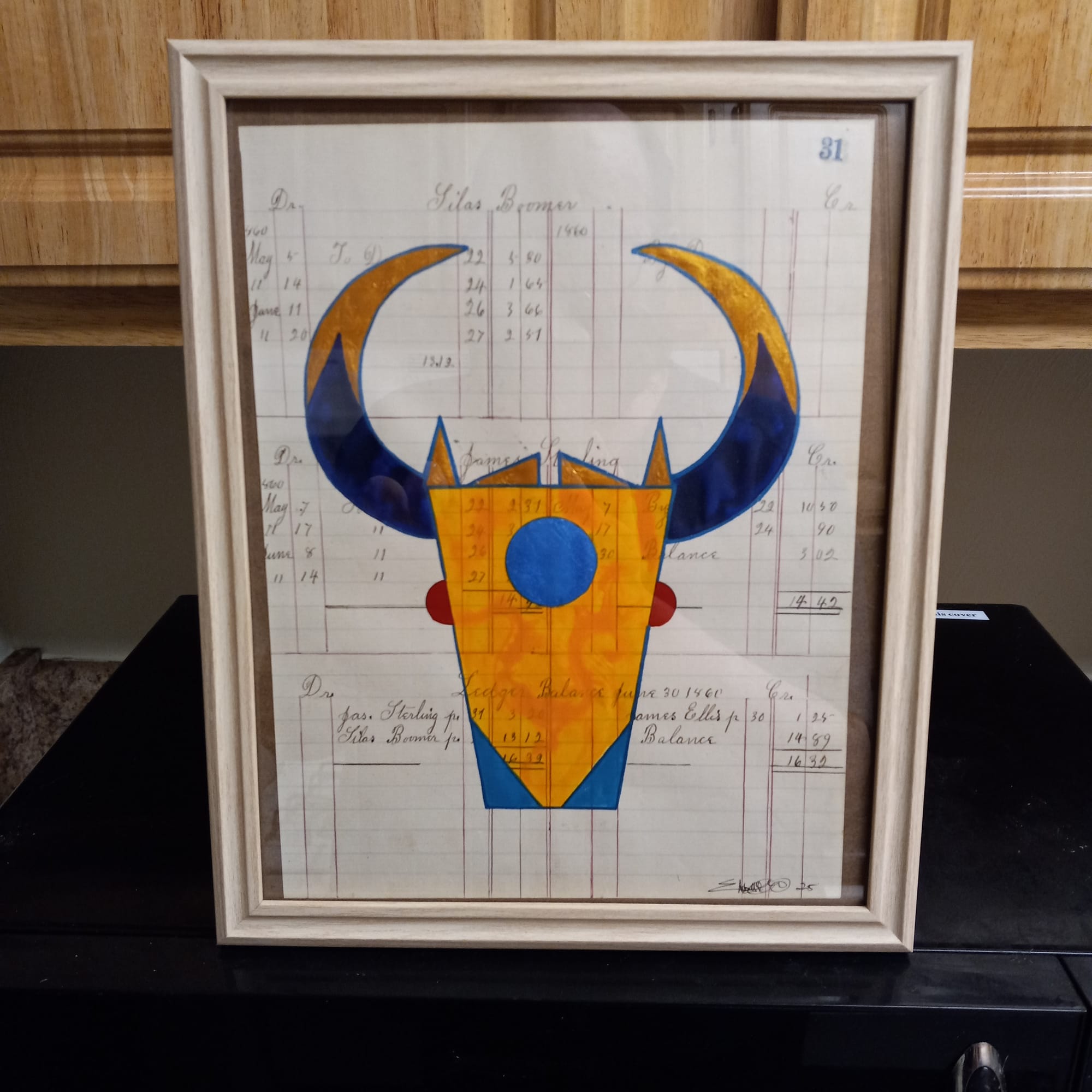
Meanwhile, I'd begun exploring contemporary Indigenous art. I found myself fascinated by Elias Jade Not Afraid, an Apsáalooke artist born in Lodge Grass on the Crow Indian Reservation. Not Afraid's beadwork was in several museums, but his ledger art spoke to me more.
The original ledger art emerged from a messed-up situation. U.S. government policy tried to exterminate the bison, used by Apsáalooke and other Plains peoples for food, hides, and more. Art once made on bison hides transferred to paper, often pages from used accounting ledgers.
Ledger art was a key influence on the Kiowa Six and other Native American fine art movements. It later saw a revival amid rising activism in the 1960s and 1970s. In a video for an NFL collaboration, Not Afraid raises this political dimension of ledger art, calling it "almost rebellious".
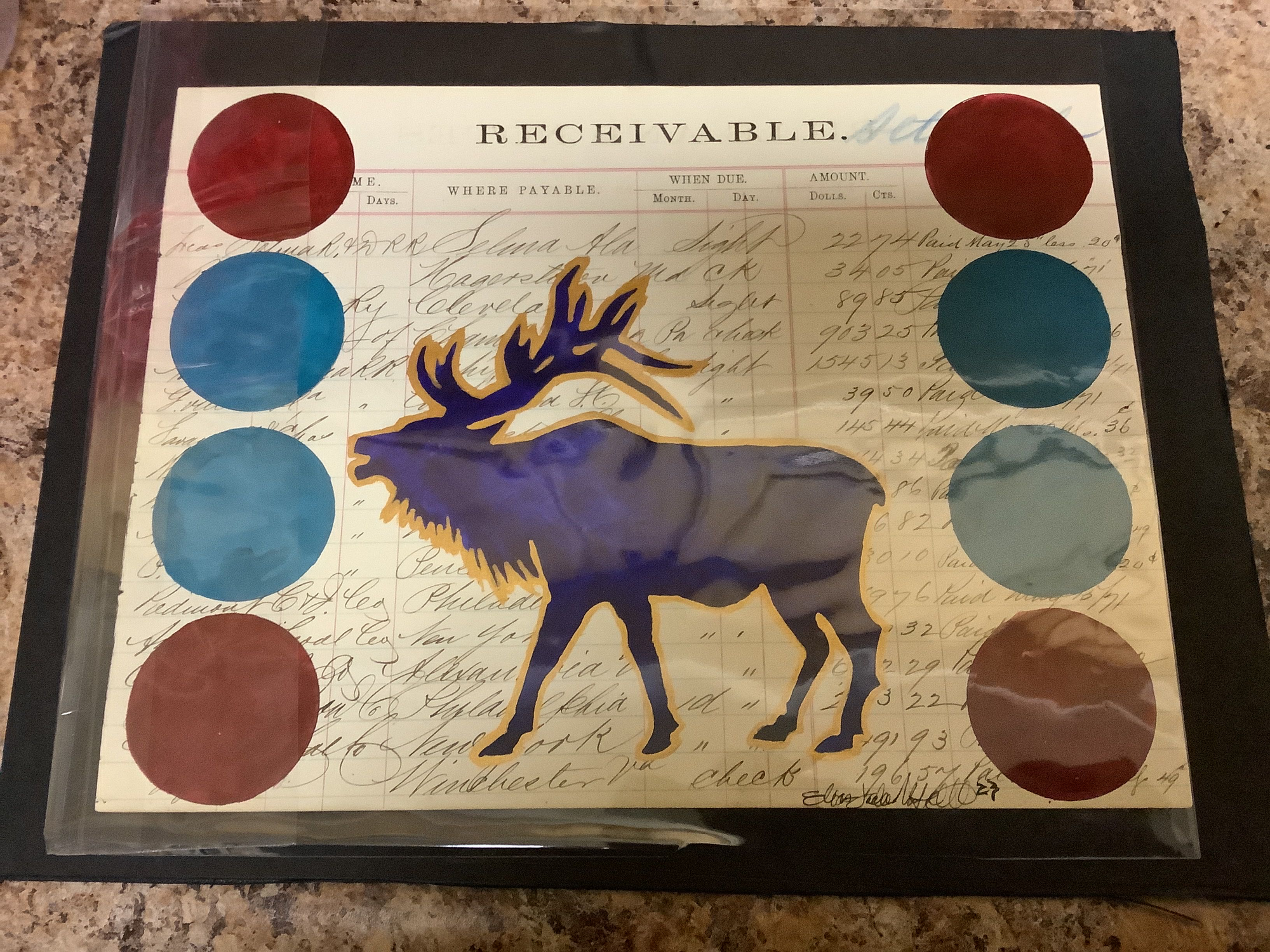
In January 2026, I offered the Taubman two Not Afraid ledger drawings that were sweeteners to various purchases I'd made. These received a surprisingly enthusiastic reception, and the acceptance process moved swiftly. It was only ten days from proposal to transfer.
Laura Higgins gave me a guided tour of the Taubman after the drop-off. A major show occupied the rotating galleries, and we stood under the gaze of a Gilbert Stuart Lansdowne portrait of George Washington as she pointed out the walls where no-longer-my art would hang.
In that moment, I had gamer thoughts, not of Magic, but Civilization. The Lansdowne portrait was a Great Work of Art in Civilization V: Brave New World. I'd placed it and other Great Works of Art in many in-game museums. How surreal, then, to understand that I'd done so in real life.
Shindig
On March 6, 2026, the Taubman Museum of Art launched 75th Anniversary: New Visions for the Permanent Collection. As an art donor, I was invited to the opening reception. Donny Caltrider drove in from Baltimore to be my plus-one, and we met face-to-face for the first time.
The reception felt intimidating to me. I'd been in similar situations while working at an auction house, but serving guests, not being one. Further, I was unknown to most of the donors at the reception. All the awkward social moments my brain will not forget flooded my thoughts.
I need not have feared. Almost everyone was welcoming. Sure, some were society figures worth more than I'll make in my lifetime, but they were there because they loved art, and so was I. Showing the Housetop-Sweep Quilt on my phone's lock screen put a face to a donation.
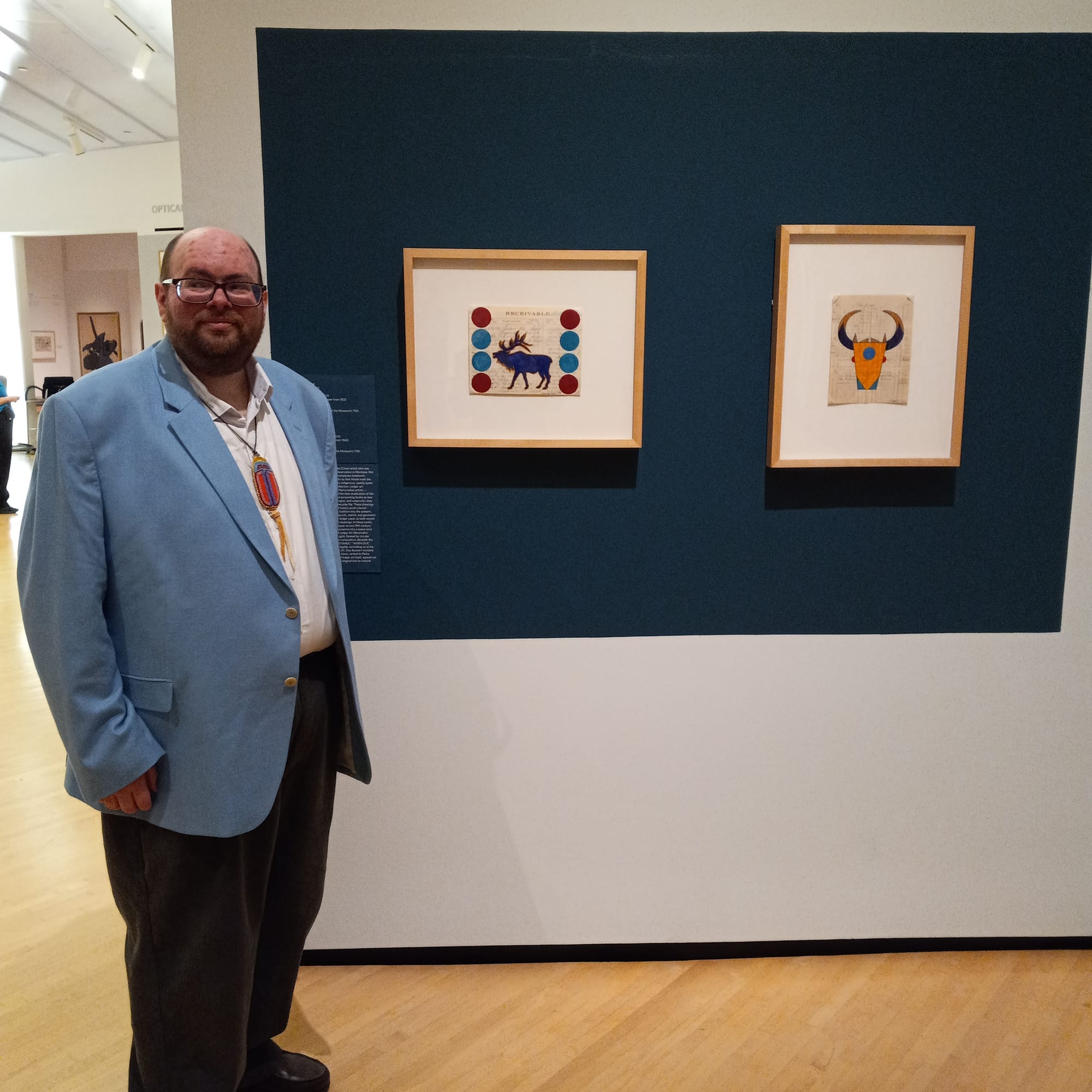
Then it was time to step into the exhibition proper and see art I once owned on the walls. I knew the works already, so I spent less time on them than the mechanics of their display, such as how the right sizes of matting and framing made the modest ledger drawings seem bigger.
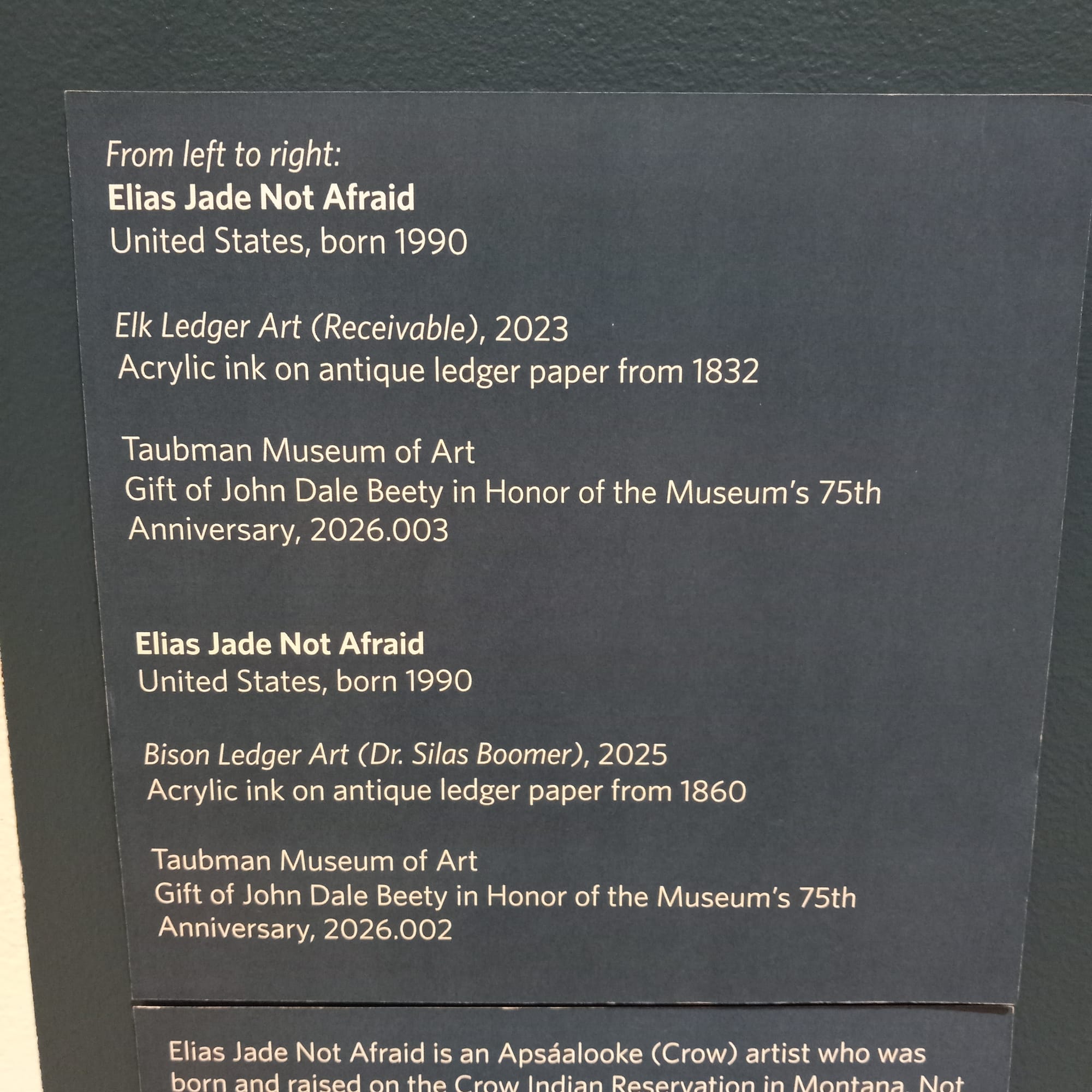
The wall labels were the strangest and second-best. Twenty, ten, five years ago, I never would've imagined my name in a credit line. That was for other, richer people. Yet there it was: "Gift of John Dale Beety in Honor of the Museum's 75th Anniversary".
Second-best, because watching people was better. An artist head-snapped and walked sideways to look at the ledger drawings. Little hands reached for the quilt, kept away by a mother just as entranced. Every moment gave me the same rush as a good game of Magic.
Call
After all the hubbub of the 75th Anniversary exhibition launch ebbed, Laura Higgins followed up by phone. I'd learned that the ledger drawings were the Taubman's first works of contemporary Indigenous art, which brought to mind another of my mom's favorite sayings: That needs fixing.
The Taubman has a commitment to state and regional art. Without Indigenous artists of Virginia and the Southeastern United States, that story is incomplete. As a donor, I have an open lane to shape the museum's holdings there, and much of the call focused on next steps.
The conversation drifted, as conversations do, and landed on The Brown Bomber, an illustration by Robert Riggs that is now one of the Taubaman's prize works. I texted her a photo of my own boxing illustration: Zara Alfonso's preparatory drawing for Tenacious Underdog.
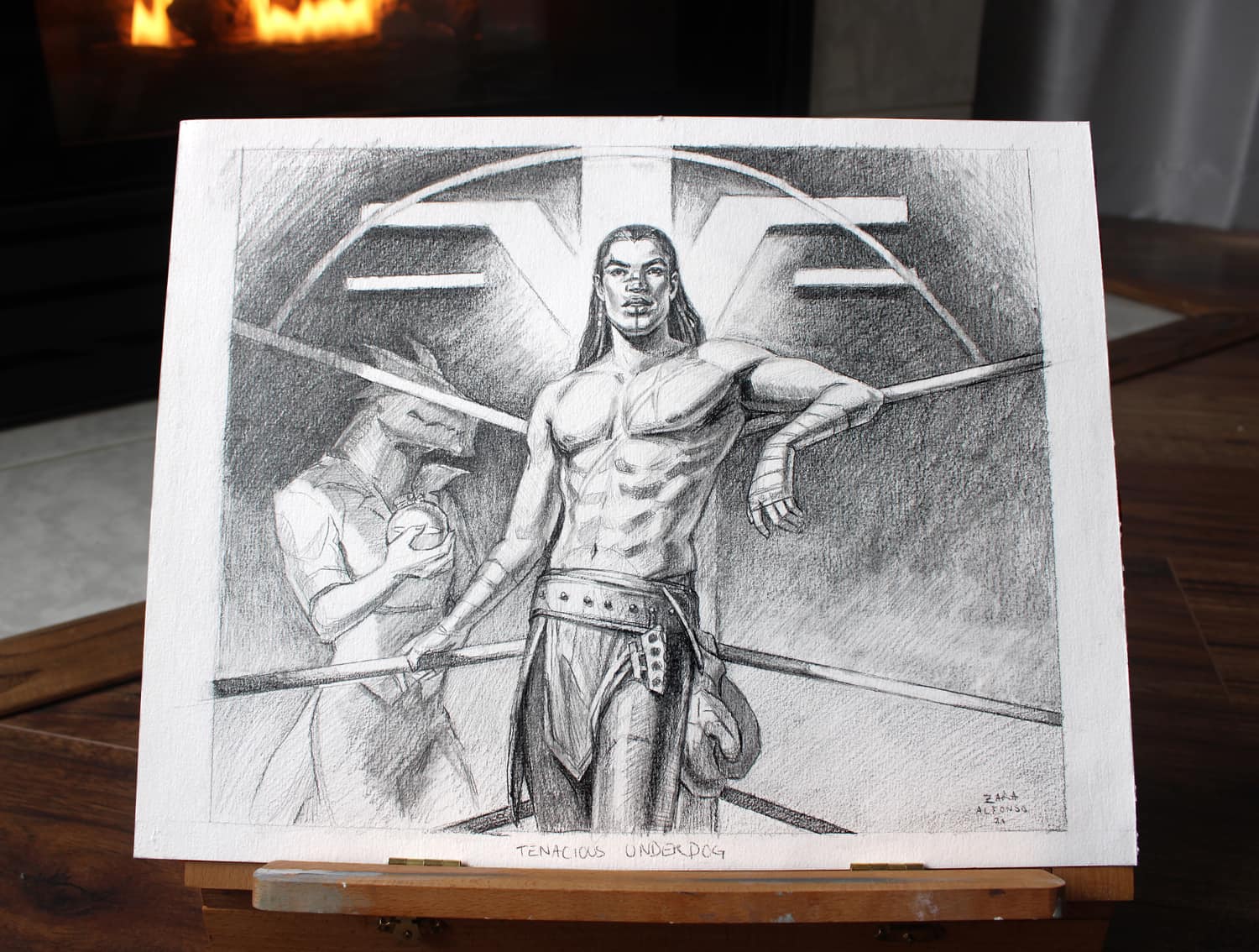
She asked if I dabbled in illustration. No, I answered, that's where my holdings are strongest.
It took a little explaining, but I got across how the New Capenna setting took inspiration from 1920s New York, how the Riveteers brought some Ashcan School to the set's Art Deco stylings.
How Magic: The Gathering, by commissioning thousands of illustrations each year, was the 21st-century successor to magazines such as The Saturday Evening Post, which had paid Norman Rockwell to paint another crown jewel of the Taubman, Framed.
I forgot to mention that the 75th Anniversary exhibition wasn't the first time art I'd owned had been part of a show. There will be other chances.
Pitch
In April 2026, I returned to the Taubman to hear an artist talk from Mokha Laget, who designed the new mural outside the museum. After the talk, I spoke with a member of the Collections + Exhibitions staff whom I'd met for the first time at the New Visions reception.
Word of my Magic: The Gathering activities had spread among folks at the Taubman, several of whom are players themselves. The staff member mentioned an exhibition of game illustration as being on their "someday" list. I smiled and said I'd email a few suggestions.
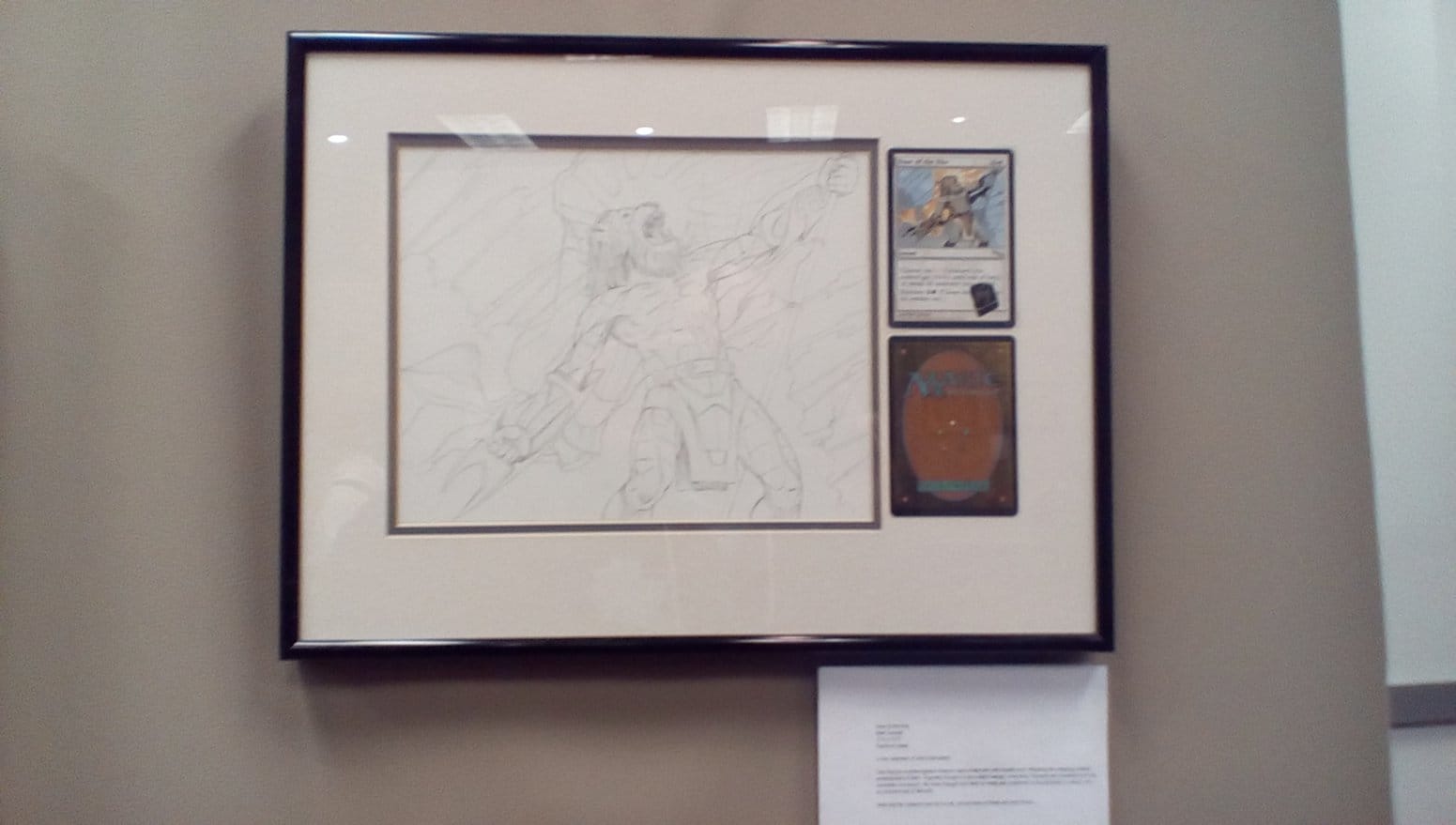
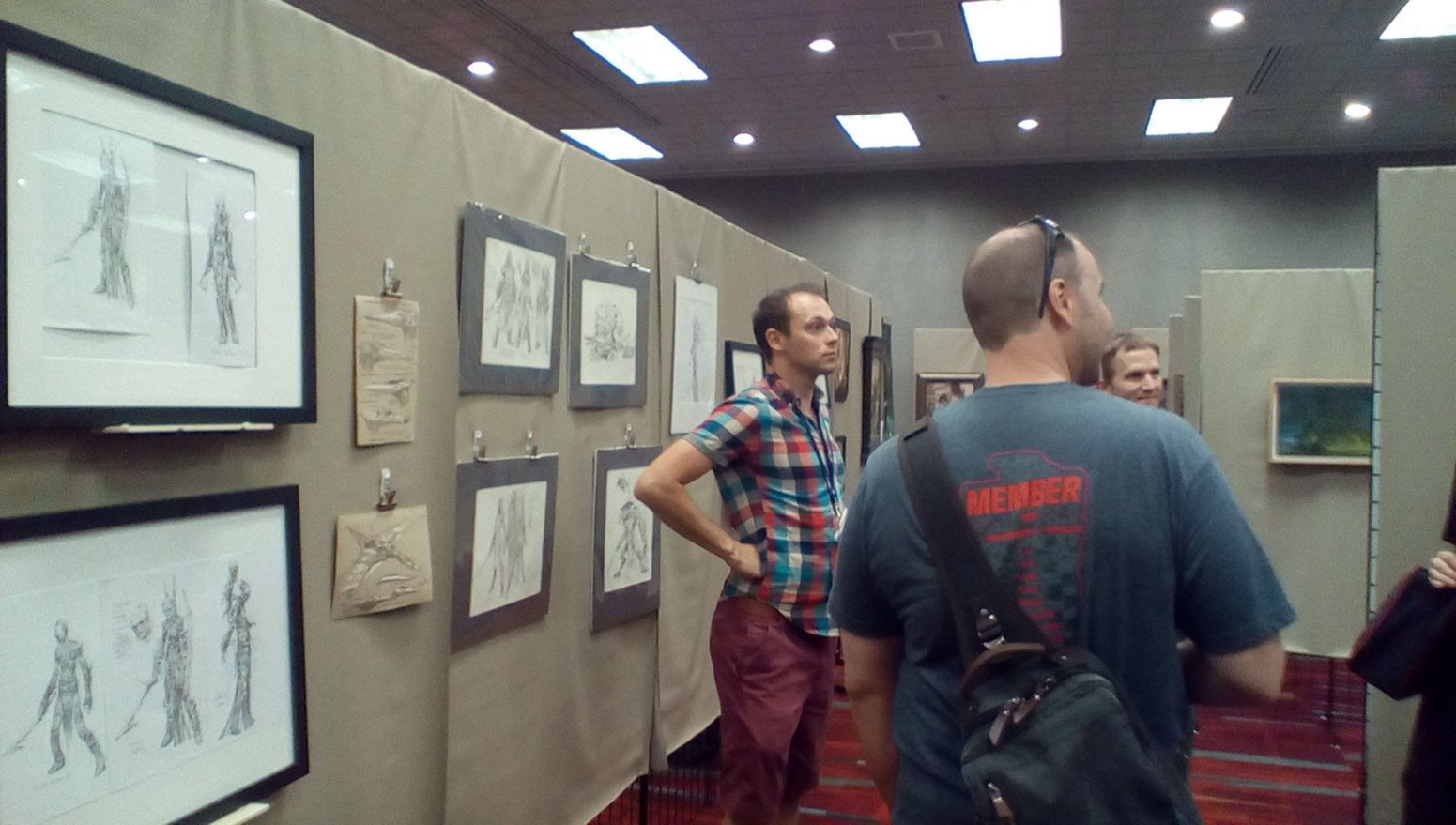
Which I did. People to know. Exhibition precedents such as the 2017 Magic Art Show, which included my Roar of the Kha preparatory drawing. Ways to align such a presentation with other institutions and remits, such as the Taubman's focus on Virginia and Southeastern artists.
There's no guarantee such a show will happen at the Taubman, of course. Then again, that's not really the point. I've failed and succeeded too much to think of anything as certain either way. All I can do is sow as many seeds as possible and see which ones sprout.
With enough skills, enough work, enough connections, some will. I wasn't planning on lending art to a Magic Art Show in 2017 when I started collecting in the early 2000s, or finding my way back to art museums and Museum Art in the 2020s. Yet being open to both let them flourish.
Sow your own seeds. Nurture your sprouts. And if you should pass through Roanoke in 2030 when Mountain Fantasy: The Soaring Art of Magic: The Gathering is on display at the Taubman, stop by and check out the show. I might have my name beside a landscape or two.
